Examination halls reward a particular kind of intelligence: the ability to convert familiar concepts into correct answers before the clock runs out. Lesson 10 of this course closes the loop on time, speed, and distance by shifting attention from theory to execution. Students who have already worked through unit conversions, average speed, relative speed, trains, and races now face the final discipline — performing under pressure with accuracy and pace.
This closing lesson treats problem-solving as a trainable skill rather than an inherited talent. It examines how question patterns repeat across competitive exams, how shortcuts are derived from standard formulas, and how a candidate can allocate scarce minutes across a mixed section. The emphasis falls on decision-making: which questions to attempt first, when to abandon a calculation, and how to verify answers without wasting time.
Because this is the last lesson of the course, it also serves as structured revision. Core formulas are consolidated into compact reference sets, common traps are catalogued, and a realistic practice protocol is outlined. The goal is a candidate who enters the exam hall with a rehearsed system, not a hopeful memory of scattered techniques.
On This Page
Consolidating the Core Formula Set Before the Exam
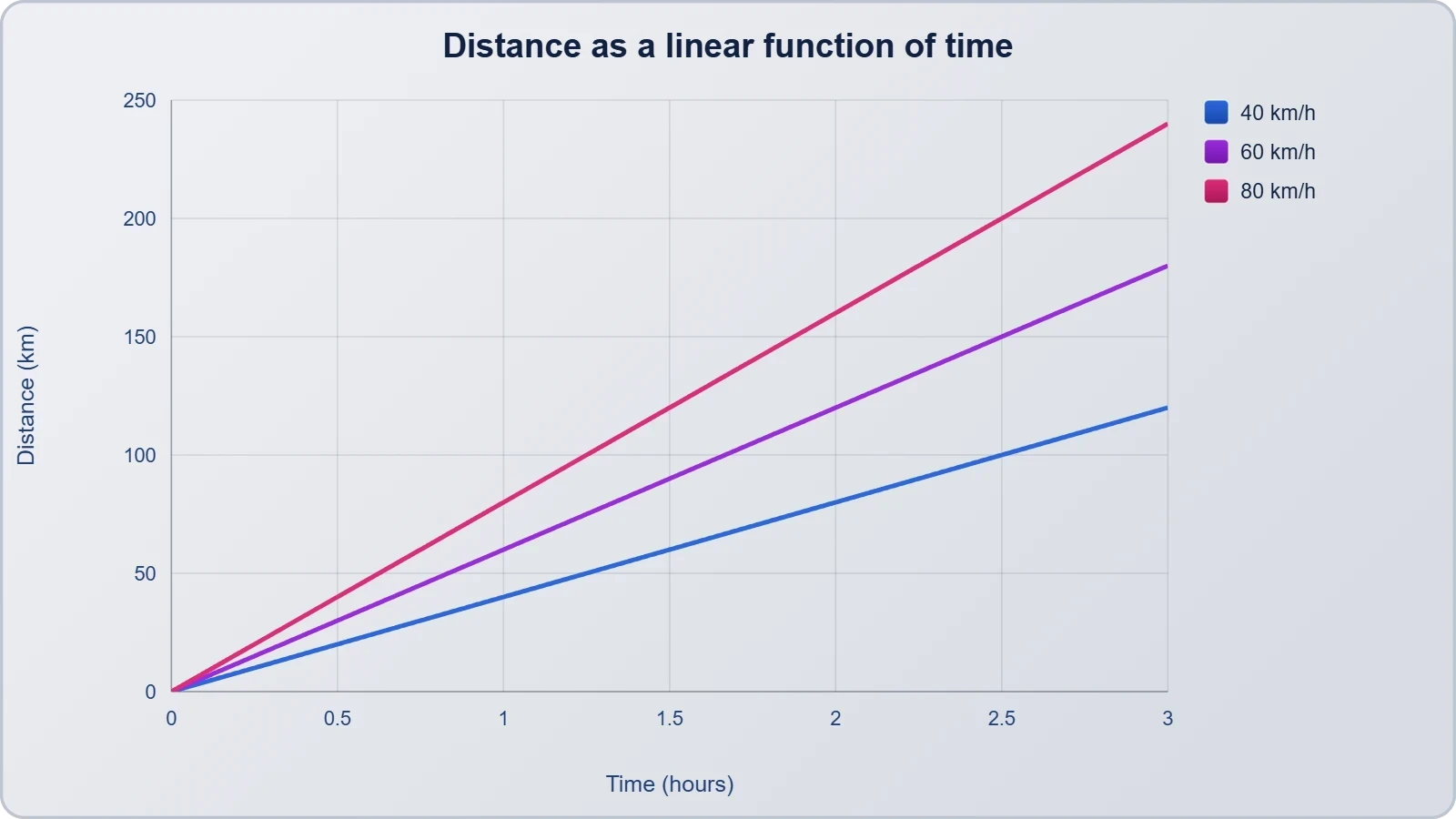
Every fast solution in this topic rests on a small family of relationships that must be recalled instantly, without derivation. The foundational identity connects distance, speed, and time, and nearly every competitive question is a rearrangement of it. Candidates who hesitate over which variable to isolate lose seconds that compound across a full section.
The Three-Variable Foundation and Its Rearrangements
The base relationship is stated as distance equals speed multiplied by time, and its two inversions follow directly. When distance is fixed, speed and time vary inversely, a principle that powers a large share of shortcut questions. Recognising this inverse link allows a candidate to skip algebra entirely and reason proportionally.
###D = S \times T \quad\Longleftrightarrow\quad S = \frac{D}{T} \quad\Longleftrightarrow\quad T = \frac{D}{S}###
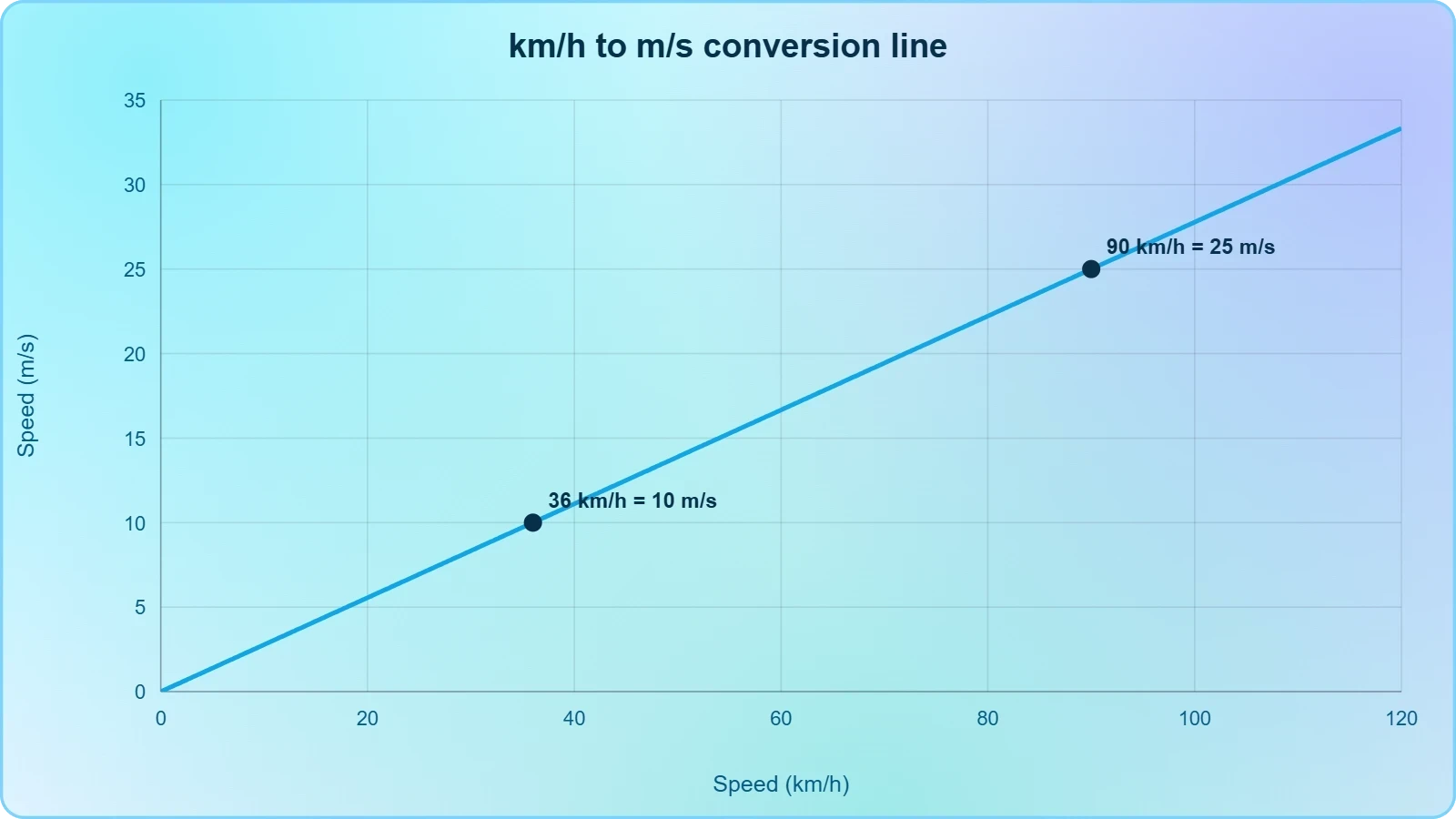
Unit consistency deserves equal attention, because mismatched units are the most common silent error. Speeds given in kilometres per hour must be converted to metres per second before combining with distances in metres. The conversion factor of five-eighteenths is worth memorising alongside the formulas themselves.
Derived Tools: Average Speed and Relative Motion
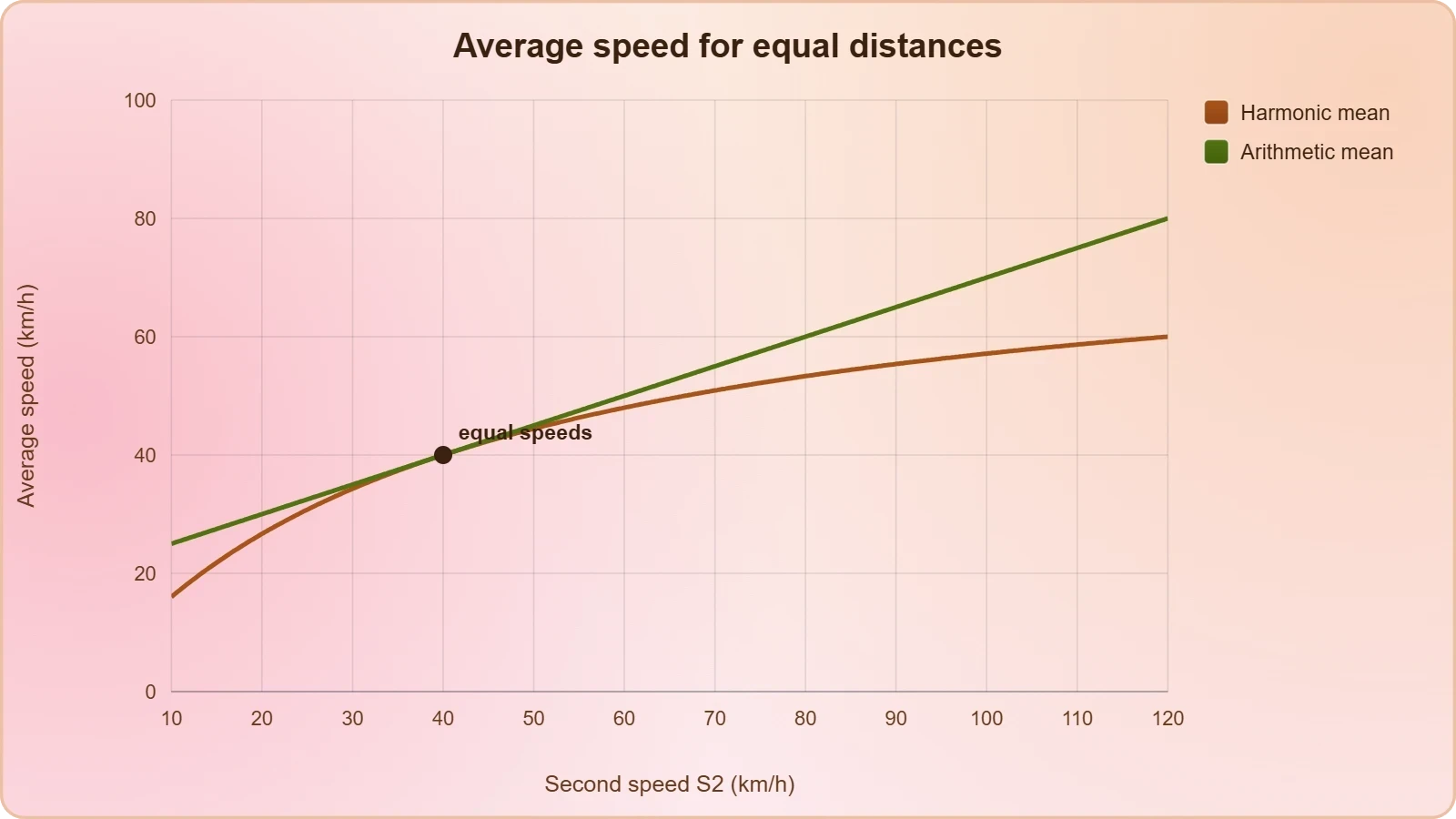
Average speed is not the arithmetic mean of two speeds unless the distances are equal; it is total distance divided by total time. For equal distances travelled at speeds ##S_1## and ##S_2##, the harmonic form below applies and should be recalled as a single unit. Candidates who confuse it with the simple average produce wrong answers with confident speed.
###S_{avg} = \frac{2 S_1 S_2}{S_1 + S_2}###
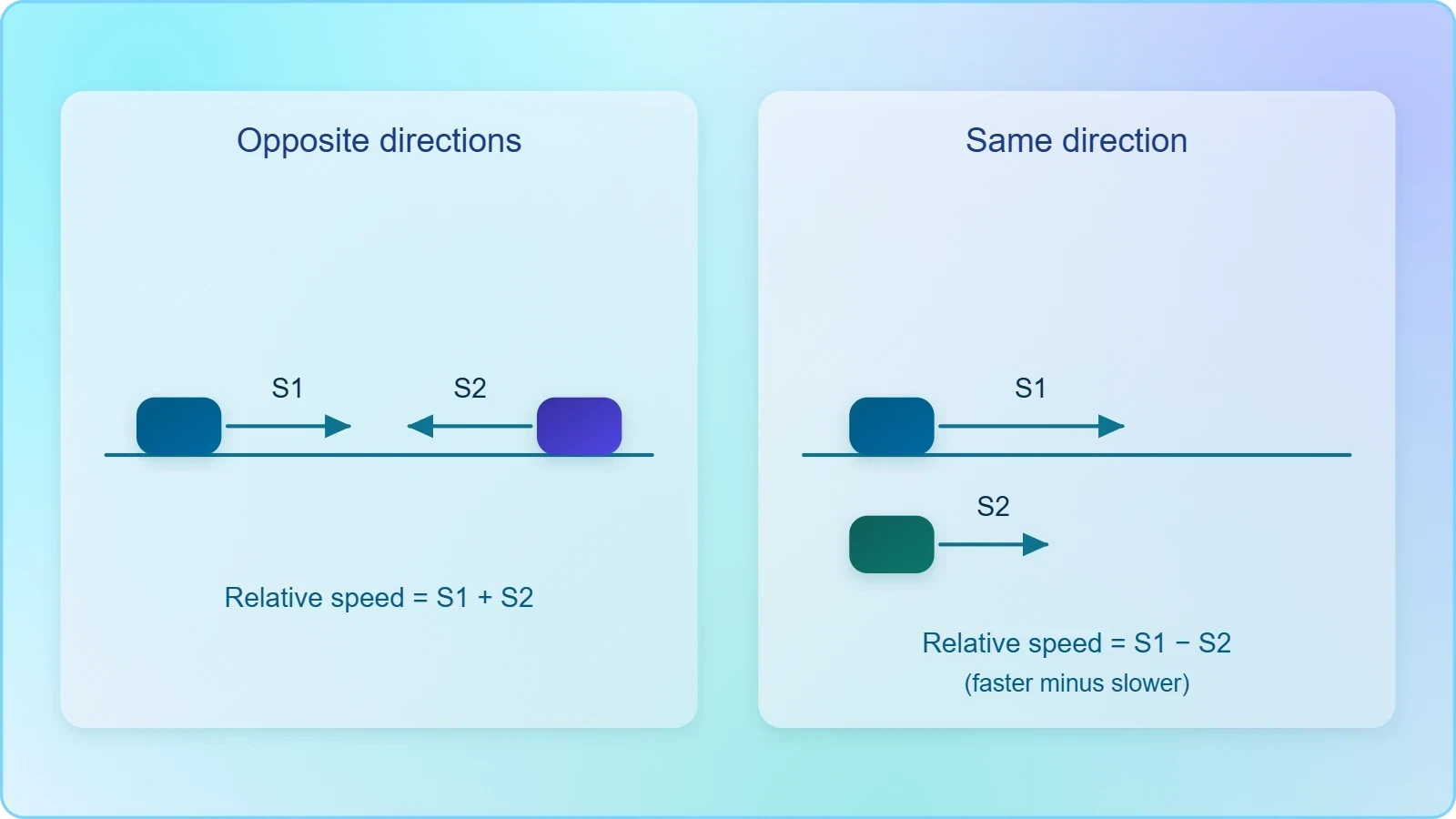
Relative speed governs every problem involving two moving bodies, whether trains crossing, boats in streams, or runners on a track. Bodies moving in opposite directions add their speeds; bodies moving in the same direction subtract them. This single rule, applied carefully, resolves the majority of relative-motion questions in exams.
Recognising Recurring Question Patterns
Competitive exams recycle a finite set of question archetypes, and familiarity with them converts reading time into solving time. A candidate who identifies the pattern within the first sentence can often predict the required formula before finishing the question. Pattern recognition is therefore a legitimate exam skill, not a shortcut of dubious value.
The Standard Archetypes and Their Signatures
Train-crossing questions signal themselves through references to platform lengths and pole-crossing times. Late-arrival questions, where a traveller adjusts speed to reach on time, follow a predictable two-equation structure. Stream and boat problems announce themselves through current speeds, while race questions mention head starts or beats by a margin.
Each archetype carries a signature phrase that should trigger an immediate mental template. Candidates who build a personal index of these phrases reduce the cognitive load of interpretation. The table below maps common signatures to their underlying structures for rapid reference during revision.
Traps That Consume Marks Silently
Certain errors recur so reliably that they deserve explicit rehearsal. Mixing units mid-calculation, treating average speed as a simple mean, and forgetting that a train must clear its own length are the three most costly. Each trap produces a plausible wrong answer, which makes it harder to detect without deliberate checking.
Another frequent trap involves direction: candidates add speeds when bodies move in the same direction, or subtract when they approach each other. A brief pause to visualise the physical situation prevents this error entirely. Visualisation costs two seconds and saves an entire question.
Shortcut Techniques That Preserve Accuracy
Shortcuts earn their place only when they remain reliable under pressure. The most dependable techniques are those derived from ratio reasoning, because they bypass the arithmetic that invites careless mistakes. When two quantities vary inversely, a candidate can often answer by inspection rather than by solving equations.
Ratio and Proportion as a Primary Tool
If a journey is completed at three-quarters of the usual speed, the time taken rises to four-thirds of the usual time. This proportional leap eliminates the need to assign distances or solve for unknowns. Competitive exams are built around such clean ratios, and candidates should train themselves to spot them.
The same logic applies to partial journeys, where a traveller covers one segment at one speed and another at a different speed. Setting up a ratio of times rather than absolute values frequently collapses a two-variable problem into a single step. Practice with varied numbers builds the intuition required to apply this fluently.
Approximation and Option Elimination
Multiple-choice formats permit a strategy that open-ended questions do not: working backwards from the options. Substituting the middle option often reveals the direction of the correct answer within seconds. This technique is especially effective when the arithmetic involves awkward fractions or large numbers.
Approximation complements elimination by narrowing the plausible range before precise calculation. Rounding speeds to convenient values and estimating the answer can eliminate two or three options immediately. The final precise computation then confirms a choice rather than discovering it from scratch.
Allocating Minutes Across a Mixed Section
Time management in a quantitative section is a budgeting problem with a hard deadline. Candidates who treat every question as equally deserving of attention inevitably run short at the end. A disciplined allocation, decided in advance, protects the marks that are genuinely within reach.
Setting a Per-Question Budget
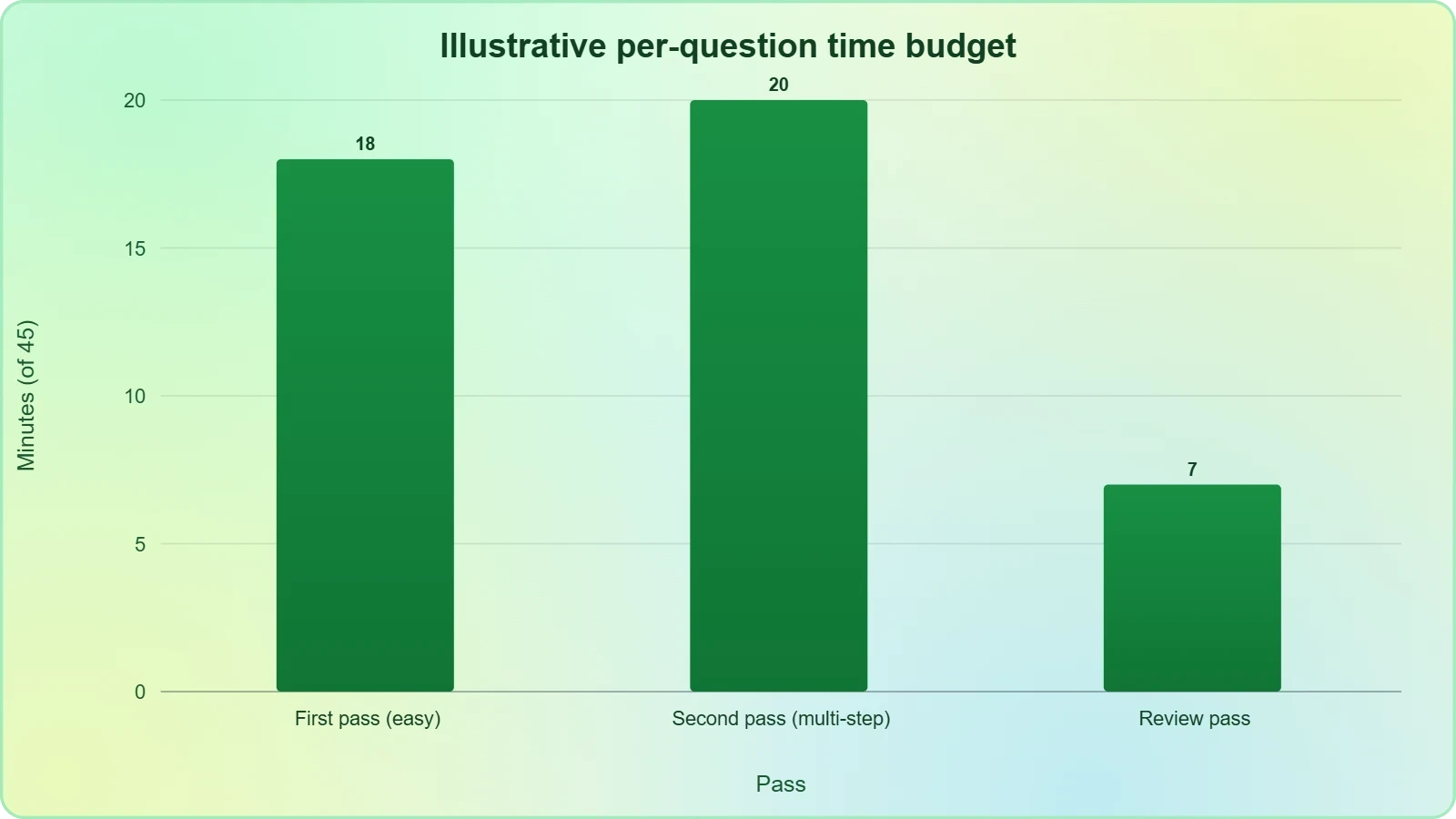
A practical rule assigns roughly one minute to straightforward questions and up to two minutes to multi-step ones. Anything exceeding the upper bound should be flagged and revisited only after the section is otherwise complete. This prevents a single stubborn question from consuming the time of three easier ones.
The budget must be calibrated to the actual section length and question count, not adopted blindly. A candidate facing thirty questions in forty-five minutes has a different arithmetic than one facing twenty in thirty. Rehearsing with timed mock sections reveals the realistic pace far better than any general guideline.
The Three-Pass Strategy
The first pass collects every question that yields quickly, building momentum and securing easy marks. The second pass returns to flagged questions with the remaining time, applying full attention to their structure. The third pass, if any time survives, is reserved for verification of answers already marked.
This layered approach converts the exam from a single stressful sweep into three manageable phases. It also creates a psychological buffer, because early success reduces the anxiety that clouds later reasoning. Candidates who practise the three-pass rhythm report steadier performance than those who work strictly in order.
Verification Habits That Protect Marks
Verification is not a luxury reserved for candidates who finish early; it is a routine that catches errors before they are committed to the answer sheet. The most effective checks are quick, targeted, and built into the solving process rather than appended at the end. A candidate who verifies selectively outperforms one who verifies nothing.
Sanity Checks on Magnitude and Units
Before marking an answer, a candidate should ask whether the magnitude is plausible. A train travelling at 60 km/h cannot cross a 500-metre platform in two seconds, and such absurdities signal an arithmetic slip. This single question catches a surprising proportion of errors.
Unit checks operate on the same principle: if the question asks for time in minutes, an answer in hours is wrong regardless of the arithmetic. Writing the unit alongside every intermediate result keeps the calculation honest. These habits cost almost nothing and repay their cost many times over.
Reverse Substitution and Boundary Testing
Substituting the computed answer back into the original conditions confirms consistency without redoing the entire solution. If the derived speed, applied to the given distance, reproduces the stated time, the answer is almost certainly correct. This reverse check is faster than a full re-solve and equally reliable.
Boundary testing applies to questions with ranges or inequalities, where an answer must satisfy limiting conditions. Checking the extreme case often exposes an error that a single substitution would miss. Together, these two habits form a compact verification protocol suitable for exam conditions.
Building a Realistic Practice Protocol
Strategy becomes skill only through rehearsal under conditions that resemble the real examination. Untimed practice builds understanding, but timed practice builds the judgment that separates a competent solver from a fast one. The final weeks before an exam should therefore be dominated by timed sets.
Structuring Timed Practice Sessions
A productive session begins with a mixed set of twenty to thirty questions drawn from all topics in the course. The candidate works against a clock, applies the three-pass strategy, and records the time spent on each question. The record, not the score, is the primary output of the session.
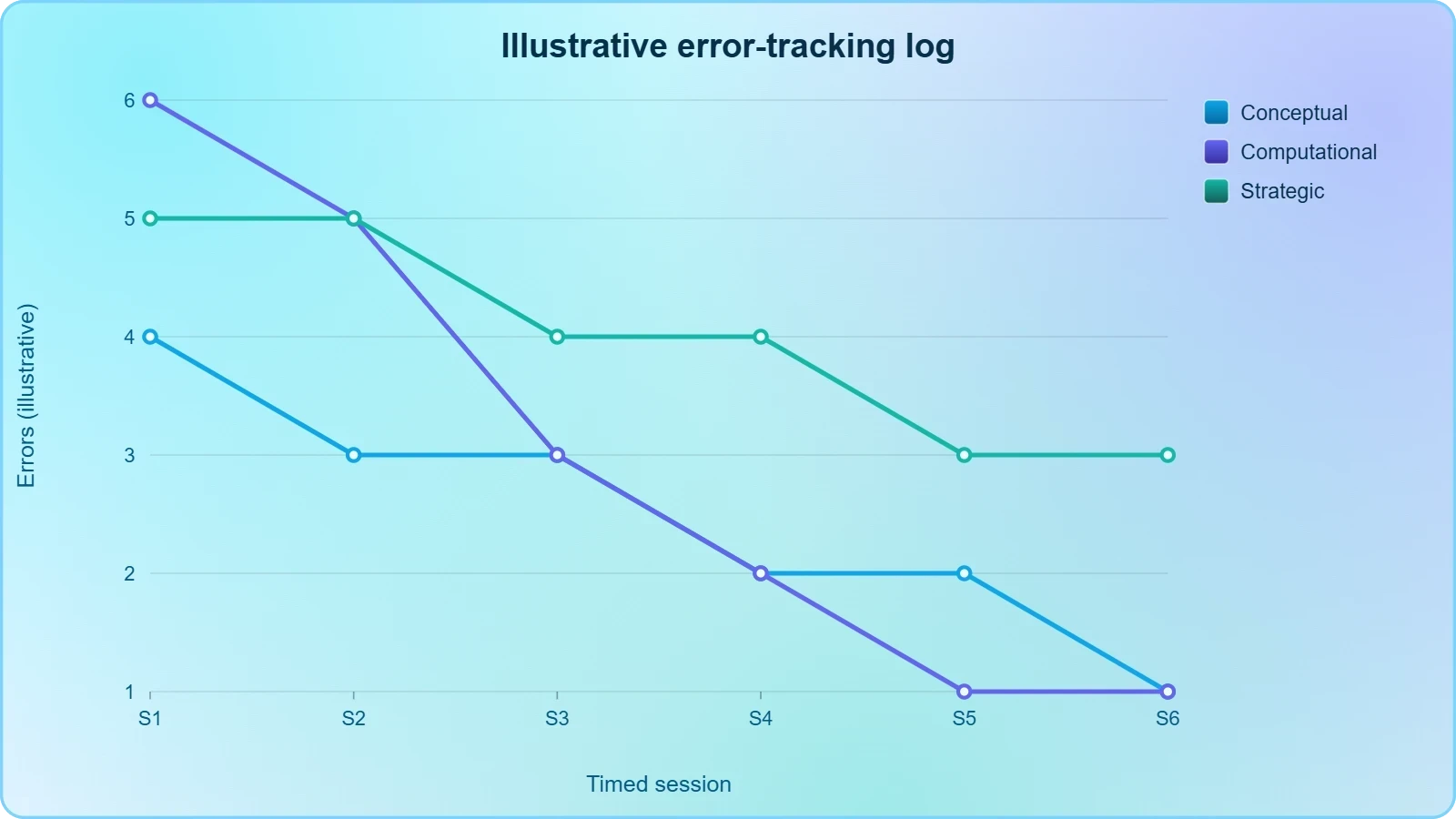
Review follows immediately, while the reasoning is still fresh. Each error is classified as conceptual, computational, or strategic, and the classification determines the remedy. Conceptual gaps require revision; computational slips require verification habits; strategic errors require adjustment of the time budget.
Tracking Progress and Adjusting the Plan
A simple log of dates, scores, and error categories reveals trends that a single session cannot. If computational errors dominate, the remedy is deliberate checking; if strategic errors dominate, the remedy is a revised allocation. Data-driven adjustment replaces anxious guesswork with measured improvement.
The final week should taper toward lighter revision, formula recall, and a few short timed sets to maintain sharpness. Cramming new techniques at this stage rarely helps and often disrupts established rhythm. Confidence, built on rehearsed systems, is the most valuable asset a candidate can carry into the hall.
Bringing the Course Together
Ten lessons have moved from the definition of speed to the management of an examination hall, and the final lesson closes that arc deliberately. The concepts are now familiar; what remains is the disciplined application of them under constraint. This is where preparation converts into performance.
What the Course Has Established
The course began with the basic relationship between distance, speed, and time, then layered unit conversions and average speed upon it. Relative speed extended the framework to two moving bodies, and trains, streams, and races applied it to concrete scenarios. Each lesson added a tool without discarding the previous ones.
Lesson 10 has added the final layer: the strategic layer that governs how those tools are deployed. Formula recall, pattern recognition, ratio shortcuts, time budgeting, and verification now sit alongside the mathematics. Together they form a complete preparation for the quantitative aptitude sections of competitive examinations.
Preparing for the Next Stage
Beyond this course, the same principles extend into data interpretation, where speed-time graphs and distance tables appear frequently. Candidates who have internalised the relationships here will find those graphical questions considerably easier. The foundation laid across these ten lessons is designed to travel.
The immediate next step is practice, and plenty of it, under timed conditions. Each mock test is an opportunity to refine the budget, sharpen the shortcuts, and rehearse the verification habits. Mastery in this topic is not a destination but a rhythm, sustained by regular, deliberate rehearsal.
Also Read
- No links available.
From our network :
- Limits: The Squeeze Theorem Explained
- How to secure postgres connections across VPC, VPN, and cloud
- How to design postgres partitions with native and hash methods
- Bitcoin Hits $100K: Crypto News Digest
- JD Vance Charlie Kirk: Tribute and Political Strategy
- How to migrate to postgres using logical replication and cutover
- The Diverse Types of Convergence in Mathematics
- Bitcoin price analysis: Market signals after a muted weekend
- Limit Superior and Inferior
RESOURCES
- No results found.