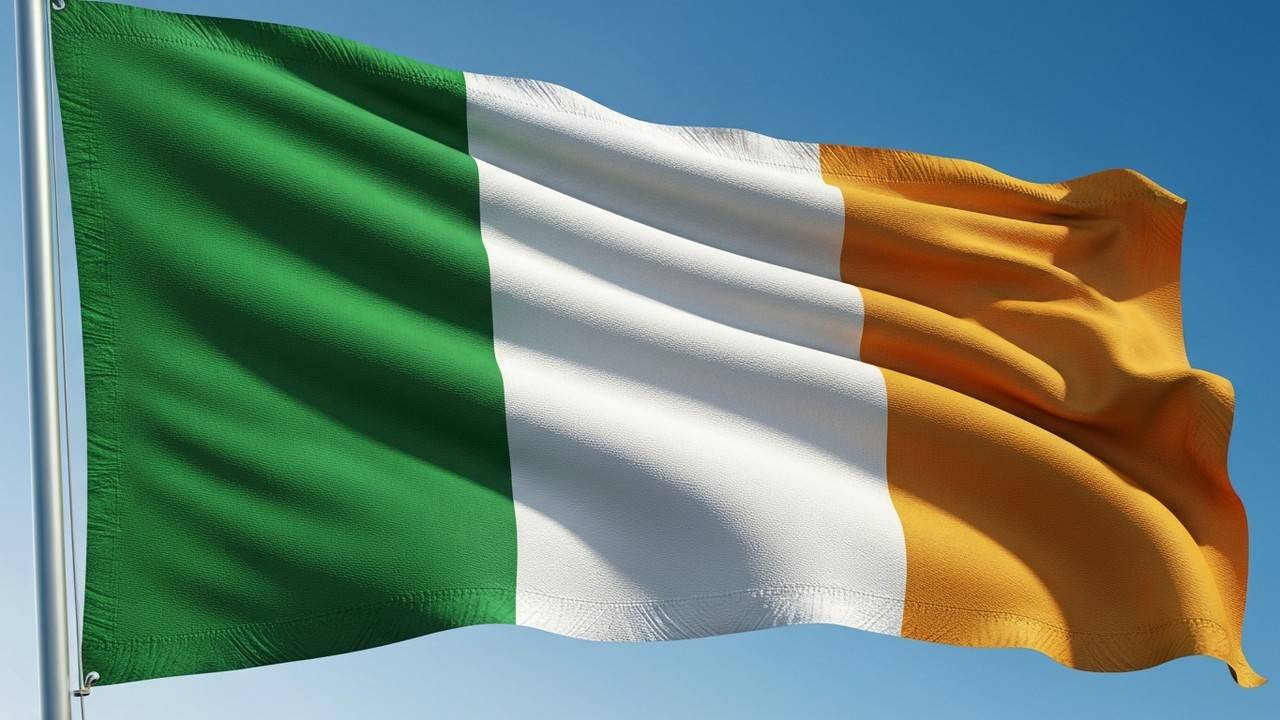
To understand the significance of the Irish flag, we must first learn to appreciate its colors and design. The Irish flag, a symbol of national identity, is a tricolor of green, white, and orange, each color with a specific meaning. You’ll learn to appreciate the symbolism of the flag, which represents the history, unity, and aspirations of the Irish people. This guide delves into the flag's rich history and profound symbolism, offering insights into its significance.
On This Page
We Also Published
Understanding the Irish National Flag's Colors
The Irish flag is composed of three vertical stripes: green, white, and orange. Each color holds significant meaning, reflecting the complex history of Ireland. The green stripe, positioned closest to the flagpole, symbolizes the Roman Catholic community, representing the majority of the Irish population. It’s a bold statement of identity, deeply rooted in the nation's cultural and religious heritage.
The Meaning of White
The white stripe in the center of the flag represents peace and unity between the two primary religious groups within Ireland: the Roman Catholics and the Irish Protestants. This stripe signifies the hope for reconciliation and a future where religious differences do not divide the nation. It stands as a beacon for harmony, suggesting a shared vision of a peaceful and unified Ireland.
The Meaning of Orange
The orange stripe signifies the Irish Protestants, particularly those who supported William of Orange. This color acknowledges the historical presence and contributions of the Protestant community in Ireland. It is a symbol of inclusivity, recognizing the diverse elements that make up the Irish identity. The orange stripe on the flag is a nod to the past and its role in the nation's identity.
The Historical Context of the Irish Flag
The origins of the Irish flag date back to the 19th century, drawing inspiration from the French Tricolore during the independence movement. The design was intended to unite various factions under a single symbol. This tricolor was a symbol of hope and resistance during a time of struggle, representing a shared desire for self-determination. The flag's design, therefore, is not merely aesthetic; it is a powerful statement of intent.
Evolution of the Flag
The earliest flags associated with Ireland had different designs, including a blue background with a golden harp. Over time, the green flag with a harp became associated with Irish identity. The current tricolor design gained prominence during the independence movement, eventually becoming the official national flag. The evolution of the flag reflects the changing political landscape and the aspirations of the Irish people.
Adoption and Recognition
The Irish national flag was officially adopted on December 29, 1937, cementing its status as the national symbol. This recognition marked a significant moment in Irish history, solidifying the flag's role in the nation's identity. The flag continues to be a powerful symbol of Irish heritage and unity, representing the nation on both domestic and international platforms.
The Enduring Symbolism of the Irish Flag
The Irish flag, with its simple yet profound design, embodies the spirit of a nation striving for unity and peace. The flag's colors, each with its distinct meaning, collectively represent the diverse elements of Irish society. The flag stands as a testament to Ireland's journey through history and its enduring commitment to the values of unity and peace. The Irish flag is more than just a piece of cloth; it is a symbol of national identity.
| Color | Symbolism | Significance |
|---|---|---|
| Green | Roman Catholics | Represents the majority of the Irish population and the nation's cultural heritage. |
| White | Peace and Unity | Symbolizes peace and unity between Catholics and Protestants. |
| Orange | Irish Protestants | Represents the Irish Protestants who supported William of Orange, acknowledging their historical presence. |
RESOURCES
- Is it okay to hang up Irish flags when I'm not Irish? : r/IrishHistory
- Off The Ball | 🗣️ "It's not just a football game." 🗣️ "This is about ...
- I'd understand the flag of Ireland, same bands and slightly different ...
- The flag is a symbol of the sovereign state (or a want to be ...
- Does anyone know who created this version of the Republic of ...
- People that say Irish flags, spoiling votes, signing petitions, boycotts ...
- I've researched the politics of flags in Northern Ireland for decades ...
- Flag of Ireland - Wikipedia
- Bratach na hÉireann: 11 facts you didn't know about the Irish flag ...
- Know Nothing - Wikipedia
- The Meaning of the Irish Flag's Colors – Patriot Wood
- Facts and Symbolism of the Irish Flag (2025) - Ireland & Beyond
- Downing Street deletes post about Northern Ireland with Irish flag
- The story behind Ireland's flag
- Green Flags: "There was a certain magic in the light of this old ...
From our network :
- How to design postgres partitions with native and hash methods
- How to secure postgres connections across VPC, VPN, and cloud
- Bitcoin price analysis: Market signals after a muted weekend
- Limit Superior and Inferior
- JD Vance Charlie Kirk: Tribute and Political Strategy
- Bitcoin Hits $100K: Crypto News Digest
- How to migrate to postgres using logical replication and cutover
- Limits: The Squeeze Theorem Explained
- The Diverse Types of Convergence in Mathematics