Democratic governance relies on fair elections, yet administrative execution across developing nations frequently interrupts essential public services. In India, public school teachers remain the primary labor force deployed during multi-phase electoral cycles, causing widespread institutional shutdowns and interrupted instructional calendars.
This systemic practice raises serious questions regarding national priorities, educational equity, and human capital development. When classrooms transform into polling booths and educators assume non-teaching responsibilities, student learning outcomes decline precipitously, disproportionately affecting vulnerable populations who depend entirely upon public education systems.
Evaluating this tension requires examining statutory mandates, academic losses, and modern administrative alternatives. By balancing constitutional electoral obligations with educational continuity, policymakers can safeguard instructional time without compromising democratic processes or neglecting the fundamental intellectual developmental needs of future generations.
TL;DR Deploying public school teachers for election duties and converting schools into polling stations causes significant educational loss. Over an academic year, repeated disruptions erode foundational learning, exacerbate socioeconomic disparities, and burden teaching personnel. Modernizing electoral staffing through civil cadres, independent registries, and automated systems offers viable alternatives to protect uninterrupted schooling.
On This Page
- The Dual Mandate of Democratic Duty and Universal Education
- Quantifying Instructional Loss and Classroom Disruption
- Administrative Strain and Institutional Resource Divergence
- Socioeconomic Disparities and Public School Marginalization
- Structural Alternatives and Modernizing Electoral Logistics
- Policy Recommendations for Protecting Academic Calendars
The Dual Mandate of Democratic Duty and Universal Education
State authorities routinely navigate the complex balance between conducting transparent civic elections and upholding statutory obligations toward youth literacy. This delicate equilibrium reveals deep institutional frictions across provincial administrative bodies managing conflicting constitutional responsibilities nationwide.
Historical Context of Teacher Mobilization in Indian Elections
For decades, election authorities have mobilized government educators as presiding officers and polling staff during federal and provincial ballots. Their reputation for civic trust, neutrality, and broad geographical presence historically positioned schoolteachers as optimal candidates for election administration duties.
This reliance expanded over successive decades as general elections grew substantially in scale, voter volume, and administrative intensity. Consequently, election commissions institutionalized educators as the baseline reserve cadre required for staffing municipal, state, and parliamentary polling operations.
Polling duties extend well beyond single voting dates to encompass training workshops, material distributions, voter roll verifications, and vote tallying. This prolonged operational window pulls essential pedagogical personnel away from instructional duties for several consecutive academic weeks.
While civic participation represents a fundamental civic obligation, routine dependence on instructional staff produces deep educational liabilities. The historical continuity of this logistical model increasingly clashes with contemporary demands for structured, uninterrupted academic calendars.
Statutory Obligations Under the Right to Education Framework
Legislative benchmarks established under modern educational frameworks mandate specific minimum instructional hours and working days each academic year. These legal guarantees ensure that elementary pupils receive consistent, high-quality schooling necessary to build foundational knowledge without disruption.
Statutory provisions explicitly limit non-educational deployments of instructional faculty, typically restricting allowable assignments to decennial censuses, disaster relief, and scheduled elections. However, the frequent occurrence of regional elections creates continuous interruptions throughout ordinary school sessions.
School administrators struggle to maintain mandatory instructional quotas when key staff members are summoned for mandatory civic duties. This regulatory tension exposes clear vulnerabilities within statutory enforcement, where democratic priorities supersede fundamental educational rights.
Reconciling legal mandates requires administrative harmonization between statutory educational guarantees and electoral logistical frameworks. Without formal institutional realignments, statutory protections for elementary students remain aspirational statements rather than enforceable everyday classroom realities.
Quantifying Instructional Loss and Classroom Disruption
Classroom disruptions generate lasting detriments that persist long after electoral ballots are counted. Measuring these lost teaching hours illustrates how fragmented term dates undermine basic cognitive retention and foundational curriculum coverage throughout key development stages.
Cumulative Working Days Lost Across Academic Sessions
A typical election cycle removes instructional personnel from classrooms for fifteen to thirty working days across distinct phases. Mandatory training sessions, material inspections, and post-election verification procedures continuously deplete available teaching hours across state facilities.
When combined with local municipal polls and regional by-elections, cumulative missed time often accounts for nearly twenty percent of instructional periods. These recurring gaps splinter the continuity required for cumulative subjects like mathematics and language literacy.
Principals often merge parallel classrooms or declare unscheduled institutional closures when high percentages of instructional faculty report for civic duty. These emergency measures compromise learning atmospheres and dilute structured curriculum pacing across multiple terms.
The resulting syllabus compression forces educators to rush through foundational conceptual units during subsequent months. Consequently, students frequently finish academic years without completing essential competencies or receiving individualized remedial guidance from teachers.
Compounding Effects on Foundational Literacy and Numeracy
Discontinuous instructional schedules critically impair early childhood reading acquisition and basic mathematical fluency. Early learners require predictable daily practice routines, which collapse when institutional shutdowns occur unpredictably throughout formative academic intervals.
Longitudinal assessments demonstrate that uncoordinated breaks cause noticeable regression in recently mastered cognitive abilities. When children miss consecutive weeks of instruction, teachers must dedicate subsequent terms to remedial revision rather than introducing advanced topics.
This dynamic permanently widens developmental gaps between students who receive stable guidance and those facing recurring interruptions. The erosion of early reading abilities cascades into higher grades, impeding subsequent comprehension across technical and scientific fields.
Cumulative foundational deficits restrict educational attainment, depressing higher education readiness and skilled workforce integration. Without targeted institutional interventions, episodic electoral disruptions entrench enduring learning losses across entire generations of primary school pupils.
Administrative Strain and Institutional Resource Divergence
Transforming educational centers into civic infrastructure places physical strain on educational assets while exhausting personnel. The procedural transformation converts spaces designed for scholastic growth into high-security electoral staging grounds, reshaping organizational priorities for extended periods.
Logistical Burdens Placed on Government School Infrastructure
Schools chosen as polling booths undergo abrupt physical reconfigurations to accommodate voting compartments, ballot storage, and security contingents. Desks and learning resources are moved or repurposed, often suffering material wear and damage during intense polling operations.
Security forces frequently occupy school premises days prior to balloting, requiring administrators to suspend extracurricular programs and midday meals. Sanitation, water supply, and electrical infrastructure endure severe strain from heavy foot traffic during peak election activities.
After voting concludes, schools rarely receive adequate maintenance resources or quick cleanup services to restore normal hygiene standards. Teachers and groundskeepers often spend subsequent days cleaning facilities rather than promptly recommencing scheduled academic curricula.
This structural wear accelerates the deterioration of public school buildings that already operate with modest maintenance grants. Consequently, physical environments remain disorganized, reducing overall classroom comfort and dampening morale for incoming student cohorts.
Psychological and Professional Toll on Teaching Personnel
Educators assigned to polling work endure substantial psychological pressure, administrative scrutiny, and legal accountability. They face punitive sanctions for minor procedural mistakes, creating intense workplace anxiety that overshadows their primary pedagogical vocations.
Navigating volatile voting stations during contentious elections exposes teaching staff to harassment, physical fatigue, and safety risks. Demanding operational hours, often exceeding twenty-four continuous hours during election days, cause physical exhaustion requiring long recovery periods.
The regular diversion of teachers toward non-academic civil duties also devalues their specialized professional identity within broader public discourse. When institutional authorities view educators primarily as cheap administrative labor, pedagogical dedication and creative instructional initiatives wane.
This organizational friction fosters high burnout rates, absenteeism, and cynicism among committed public education practitioners. Over time, diminished professional pride undermines classroom efficacy, directly compromising the long-term quality of instruction across state systems.
Socioeconomic Disparities and Public School Marginalization
Classroom closures and staff reassignments do not affect all demographic groups equally across developing economies. While private schools proceed without disruption, government-funded institutions bear the burden of civic logistics, intensifying socioeconomic inequities across the wider educational landscape.
The Asymmetric Impact on Underprivileged Student Cohorts
Underprivileged students depend heavily on public schools for structured literacy instruction, social development, and vital nutritional support. When schools close for polling activities, students lose both pedagogical guidance and access to daily government-sponsored midday meals.
Unlike privileged peers, low-income pupils rarely possess domestic resources such as personal libraries, high-speed internet, or private tutoring support. Unscheduled school shutdowns force these children into unproductive idle periods, significantly heightening dropout risks across vulnerable communities.
Furthermore, older children often assume informal domestic labor or agricultural chores during extended, unanticipated educational closures. Once pulled from academic environments, re-enrolling these students requires substantial community outreach, causing permanent friction in retention statistics.
This dynamic reinforces generational poverty by denying marginalized demographics consistent opportunities for educational advancement. Educational interruptions during civic exercises therefore transform temporary logistical choices into permanent socioeconomic handicaps for vulnerable cohorts.
Widening Gaps Between State and Private Educational Outlets
Independent private schools rarely face election-related campus takeovers or staff conscription orders from administrative authorities. Consequently, private institutions preserve continuous, uninterrupted academic schedules while state schools manage persistent structural disruptions.
This operational divergence exacerbates public perceptions that state-run educational facilities are inherently unreliable, neglected, and poorly organized. Middle-class families steadily abandon public institutions, driving commercialization trends that leave public schools underfunded and deprioritized.
Private academy students easily finish comprehensive syllabi, complete revision schedules, and prepare thoroughly for competitive standardized examinations. Meanwhile, state school students fall further behind, competing on unequal terms for coveted university placements.
The resulting disparity deepens social divisions, cementing a two-tier educational system that reinforces economic stratification. Bridging this systemic divide demands explicit operational protocols that insulate government classrooms from repeated bureaucratic interruptions.
We Also Published
Structural Alternatives and Modernizing Electoral Logistics
Modern public administration techniques offer workable alternatives to the widespread conscription of teachers during voting cycles. By reforming bureaucratic staffing systems, state authorities can run secure elections while keeping public school classrooms open for uninterrupted learning.
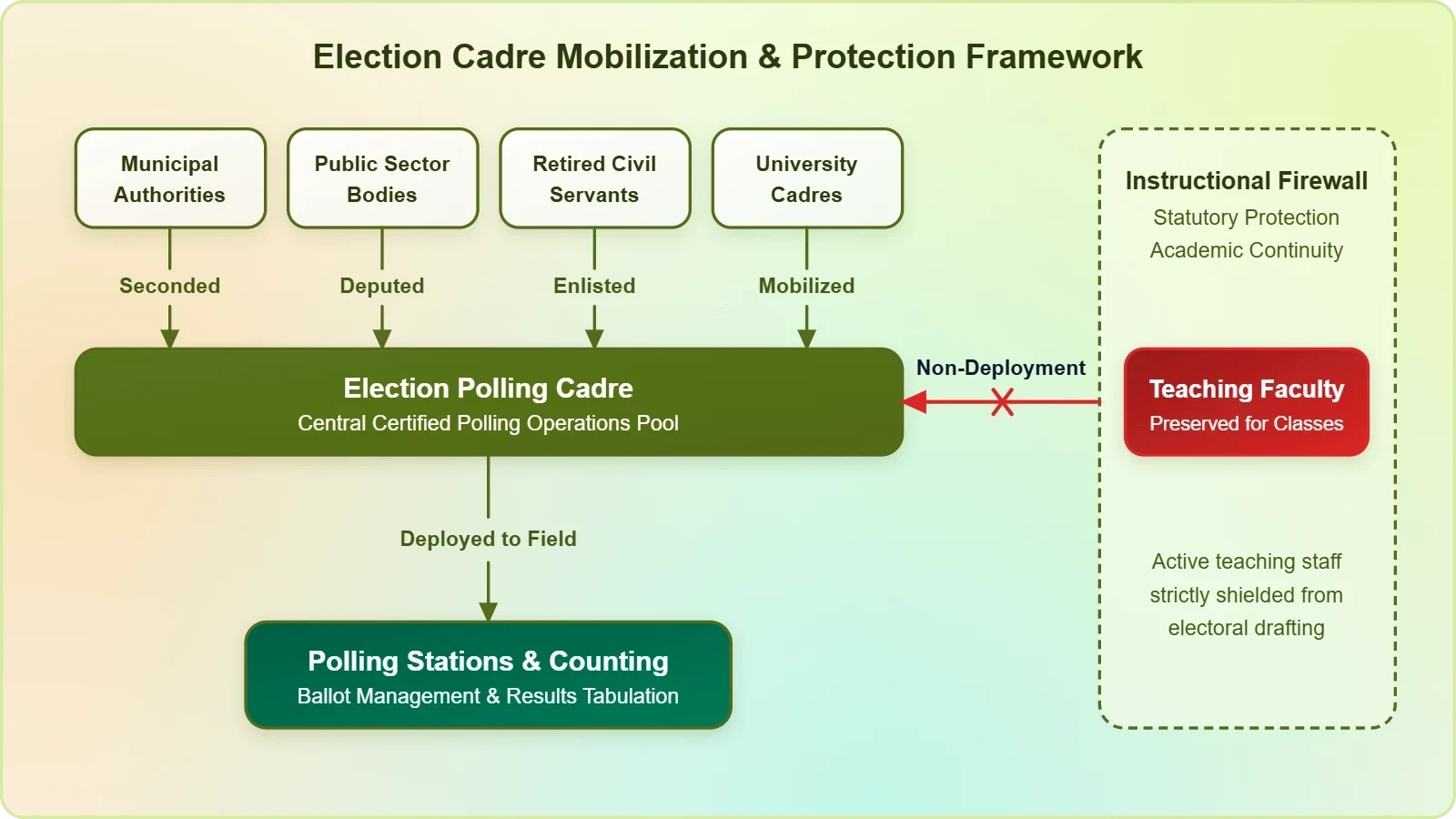
Utilizing Dedicated Electoral Cadres and Civil Servants
Civil administrative apparatuses encompass diverse non-pedagogical personnel who could staff polling booths effectively. Officials across municipal agencies, revenue boards, and state enterprises could form a reliable administrative core for election operations.
Building dedicated, reserve polling pools would lessen recurring dependencies on classroom teachers. These civil workers can be systematically trained throughout off-peak quarters, enhancing operational efficiency and lowering ballot mismanagement risks on voting day.
Additionally, accredited university students and vetted retired civil servants represent untapped human resources for election duties. Creating structured, paid civic volunteer networks would offer valuable civic experience while lightening staffing demands on public institutions.
Shifting polling duties to broader administrative pools ensures elections remain secure and well organized. Most importantly, it insulates instructional personnel, enabling teachers to concentrate on curriculum delivery and foundational academic skill development.
Digital Poll Management and Automation Technologies
Integrating modern technical solutions into voter management can significantly reduce the labor needed at polling stations. Automated check-in systems, digital identity verification, and organized tracking tools streamline queue management, requiring fewer administrative personnel per precinct.
Centralized digital rosters and automated tallying lower physical oversight demands, reducing the personnel required for vote counting. Consequently, election bodies can conduct multi-phase elections with leaner, more specialized administrative teams.
Standardizing municipal civic centers, sports facilities, and government complexes as primary polling venues further protects school sites. Leaving academic campuses off requisition lists allows classes to run safely and on schedule during election weeks.
Modernizing civic administration lets governments run clean, efficient elections while protecting public services. Preserving classroom access maintains school schedules and supports steady learning growth for students throughout the academic year.
Policy Recommendations for Protecting Academic Calendars
Protecting children's educational access requires coordinated policy solutions, active judicial oversight, and collaborative inter-agency planning. Systematic changes must turn legal guarantees into enforceable administrative guidelines that prioritize academic calendars alongside broader civic needs.
Legislative Safeguards and Judicial Guidelines on Non-Teaching Work
Judicial rulings have repeatedly cautioned against the open-ended use of teaching personnel for non-educational public administrative programs. Legislative bodies must enact stricter statutory definitions that restrict election duties solely to official polling days, keeping instructional calendars largely intact.
Statutory amendments must establish binding penalties for administrative officials who requisition educators outside authorized, legally established exceptions. Codifying these boundaries prevents local officials from treating teachers as convenient, cost-free operational labor whenever routine civic needs emerge.
State education departments should also establish legal response teams to quickly review and contest inappropriate staff conscription orders. Giving headmasters authority to decline staffing requests that breach minimum classroom staffing thresholds preserves administrative independence.
Strengthening legal protections establishes critical structural guardrails around public education environments. These statutory firewalls ensure teaching personnel remain where they are most effective: delivering instruction to students inside regular school classrooms.
Institutional Synchronization Between Election Commissions and School Boards
Election commissions and state education departments must work together through continuous, coordinated planning rather than relying on reactive, last-minute administrative orders. Aligning electoral operational calendars with official school vacation periods prevents avoidable classroom closures during regular academic terms.
Scheduling major polling phases during summer, winter, or regional term recesses lets election bodies utilize school sites without disturbing classroom instruction. This basic operational scheduling reform protects valuable instructional hours across both urban and rural school districts.
Additionally, dedicated contingency budgets should be allocated to clean, repair, and restock school facilities immediately following any civic polling activity. Prompt restitution keeps educational spaces clean, safe, and ready for teachers and students upon school reopening.
Joint institutional commitments balance democratic electoral needs with equitable educational access for all learners. Preserving uninterrupted classroom instruction ensures democratic societies cultivate literate, capable, and empowered citizens ready to guide our collective civic future.
From our network :
- How to secure postgres connections across VPC, VPN, and cloud
- JD Vance Charlie Kirk: Tribute and Political Strategy
- Bitcoin Hits $100K: Crypto News Digest
- Limits: The Squeeze Theorem Explained
- Bitcoin price analysis: Market signals after a muted weekend
- How to migrate to postgres using logical replication and cutover
- How to design postgres partitions with native and hash methods
- The Diverse Types of Convergence in Mathematics
- Limit Superior and Inferior
RESOURCES
- No results found.