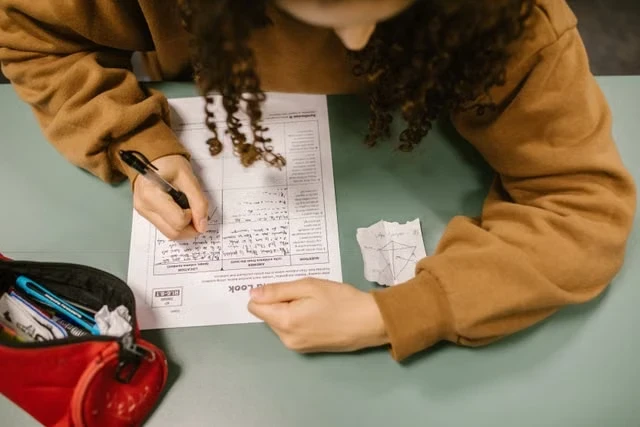
Kerala's examination calendar has placed thousands of students in a uniquely demanding position this academic year. With the first annual and higher-secondary examinations scheduled from August 13 through August 21, learners face the formidable challenge of consecutive exam days across multiple subjects. This compressed timeline transforms ordinary revision into a high-stakes exercise in cognitive management, prioritization, and psychological endurance.
The conventional approach of dedicating entire days to single subjects collapses under such scheduling pressure. Students who attempt to cram one complete syllabus per day quickly discover that fatigue, diminishing returns, and inter-subject interference undermine their efforts. What emerges instead is a need for deliberate, evidence-based revision strategies that respect both the brain's learning mechanisms and the practical constraints of a tight examination window.
This guide examines the science of interleaved practice, spaced repetition, and cognitive load management specifically tailored for consecutive examination schedules. Drawing on established educational psychology research and practical study methodologies, it provides a structured framework for students navigating the Kerala examination period and similar compressed academic calendars worldwide.
On This Page
- The Cognitive Science Behind Multi-Subject Revision
- Building a Multi-Subject Revision Schedule
- Spaced Repetition Techniques for Compressed Timelines
- Managing Cognitive Load and Preventing Burnout
- Subject-Specific Revision Strategies
- Examination Day Preparation and Execution
- Adapting Strategies for the Kerala Examination Schedule
- Sustaining Motivation and Long-Term Academic Health
TL;DR Consecutive exam days demand a fundamentally different revision approach than traditional single-subject study schedules. Effective preparation requires interleaving subjects strategically, prioritizing high-yield topics, managing cognitive load through deliberate breaks, and employing spaced repetition techniques that maximize retention within compressed timeframes. The Kerala examination schedule from August 13–21 exemplifies this challenge, but the strategies outlined here apply universally to any multi-subject examination period.
The Cognitive Science Behind Multi-Subject Revision
Understanding how the brain processes and retains information across multiple domains is essential for designing an effective revision strategy. Cognitive psychology research consistently demonstrates that interleaved practice—alternating between different subjects rather than blocking them—produces superior long-term retention compared to massed practice.
The phenomenon known as the spacing effect reveals that distributing study sessions across time enhances memory consolidation. When students revise multiple subjects on consecutive days, they inadvertently create natural spacing intervals that, when properly structured, can work in their favor rather than against them.
Interleaving Versus Blocking: What Research Shows
Studies by educational psychologists such as Rohrer and Taylor have shown that interleaving mathematics problems from different categories improves test performance by approximately 43% compared to blocked practice. The mechanism involves the brain's need to continuously retrieve and discriminate between different problem types, strengthening neural pathways associated with each subject.
For Kerala students facing back-to-back examinations, this research translates into a practical directive: alternate between subjects during revision sessions rather than dedicating entire days to single topics. This approach prevents the cognitive fatigue that accompanies prolonged exposure to one domain while simultaneously enhancing discrimination between similar concepts across subjects.
Cognitive Load Theory and Its Practical Applications
Cognitive load theory, developed by John Sweller, posits that working memory has limited capacity for processing new information. When students attempt to revise multiple subjects in rapid succession, they risk overwhelming this capacity, leading to reduced comprehension and retention. Strategic revision must therefore account for intrinsic, extraneous, and germane cognitive loads.
Practical application involves breaking revision sessions into focused intervals of approximately 25–50 minutes, followed by short breaks that allow working memory to consolidate. During these intervals, students should focus on one subject exclusively, then switch to another after the break, thereby preventing the cognitive interference that occurs when similar concepts from different subjects compete for attention simultaneously.
Building a Multi-Subject Revision Schedule
Constructing an effective revision timetable for consecutive examination days requires careful consideration of subject difficulty, personal strengths, and the specific examination sequence. Students must balance comprehensive coverage with realistic time constraints, recognizing that perfection in every topic is unattainable within compressed schedules.
The first step involves creating a master list of all subjects and their examination dates. This allows students to identify which subjects have the least preparation time and which can be prioritized based on their confidence levels and the weightage of topics within each syllabus.
Prioritization Frameworks for Limited Study Windows
The Eisenhower Matrix, adapted for academic revision, categorizes topics based on urgency and importance. High-urgency, high-importance topics—those appearing frequently in past papers and carrying significant marks—demand immediate attention. Low-urgency, low-importance topics can be deferred or covered through quick review sessions.
Students should also apply the Pareto Principle, which suggests that roughly 80% of examination questions typically emerge from 20% of the syllabus content. Identifying these high-yield topics through analysis of previous years' question papers enables strategic allocation of limited revision time toward areas that maximize potential marks.
Creating a Realistic Daily Study Template
A balanced daily template for consecutive exam revision might allocate three to four focused study blocks of 50 minutes each, separated by 10-minute breaks. Each block should target a different subject, with the most challenging subject scheduled during peak mental alertness periods, typically morning hours for most students.
Evening sessions should focus on lighter revision activities such as flashcards, formula reviews, or practice questions rather than intensive new learning. This approach ensures that students maintain momentum without exhausting their cognitive reserves before examination day arrives.
Spaced Repetition Techniques for Compressed Timelines
Spaced repetition, the practice of reviewing information at increasing intervals, remains one of the most powerful tools for long-term retention. Even within compressed examination timelines, students can implement modified spaced repetition schedules that maximize memory consolidation without requiring extensive time commitments.
The key adaptation involves shortening the intervals between reviews while maintaining the principle of retrieval practice. Instead of reviewing material after one day, three days, and seven days, students facing consecutive exams might review after two hours, six hours, and twenty-four hours, aligning reviews with natural sleep cycles that consolidate memory.
Implementing Flashcard Systems Effectively
Digital flashcard applications such as Anki utilize sophisticated spaced repetition algorithms that automatically schedule reviews based on individual performance. Students can create decks for each subject and dedicate 15–20 minutes daily to reviewing cards, ensuring that previously studied material remains accessible in working memory.
For students preferring analog methods, the Leitner Box system offers a simple alternative. Cards are organized into boxes representing different review frequencies, with correctly answered cards advancing to less frequent boxes and incorrect cards returning to the first box for immediate review.
Active Recall and Self-Testing Protocols
Active recall, the process of retrieving information from memory without external cues, strengthens neural connections more effectively than passive rereading. Students should allocate at least 30% of their revision time to self-testing through practice questions, past papers, or verbal recitation of key concepts.
The testing effect, documented extensively in cognitive psychology literature, demonstrates that retrieval practice produces superior retention compared to restudying. Even failed retrieval attempts enhance learning by strengthening the memory trace and highlighting areas requiring additional attention.
We Also Published
Managing Cognitive Load and Preventing Burnout
Psychological endurance during consecutive examination days depends as much on recovery strategies as on study techniques. Students who neglect sleep, nutrition, and physical activity undermine their cognitive performance regardless of how effectively they revise. Sustainable revision requires a holistic approach that treats the body and mind as interconnected systems.
Burnout manifests through symptoms including mental exhaustion, reduced motivation, irritability, and declining academic performance. Recognizing these warning signs early allows students to adjust their strategies before reaching a state of complete cognitive depletion.
Sleep Optimization for Memory Consolidation
Sleep plays a critical role in consolidating declarative memories, the type of knowledge typically assessed in academic examinations. Research indicates that students who sleep at least seven hours before examinations perform significantly better than those who sacrifice sleep for additional study time.
Strategic napping, limited to 20–30 minutes, can provide cognitive benefits without inducing sleep inertia. Students should avoid caffeine consumption after mid-afternoon to prevent sleep disruption, and maintain consistent sleep-wake schedules even during examination periods.
Nutrition and Hydration for Peak Performance
The brain requires adequate glucose, omega-3 fatty acids, and hydration to function optimally. Students should prioritize complex carbohydrates, lean proteins, and fruits during examination periods, avoiding heavy meals that induce drowsiness and sugary snacks that cause energy crashes.
Hydration significantly affects cognitive performance, with even mild dehydration impairing attention and memory. Students should maintain water intake throughout the day, keeping a bottle visible during study sessions as a reminder to drink regularly.
Subject-Specific Revision Strategies
Different academic subjects demand different revision approaches based on their content structure and assessment formats. Mathematics and physics require extensive problem-solving practice, while humanities subjects emphasize conceptual understanding and essay writing skills. Language examinations necessitate vocabulary building and comprehension practice.
Students should tailor their revision techniques to match the cognitive demands of each subject, allocating time proportionally to the difficulty and weightage of each examination. Understanding these subject-specific requirements prevents inefficient use of limited study time.
Quantitative Subjects: Mathematics and Physics
For quantitative subjects, the primary revision strategy involves solving varied problems rather than rereading theoretical content. Students should maintain a formula sheet for quick reference and practice applying formulas to unfamiliar problem types, simulating examination conditions to build speed and accuracy.
Past examination papers serve as invaluable resources for quantitative subjects, revealing recurring question patterns and common pitfalls. Students should complete at least one full past paper per subject under timed conditions, then analyze errors to identify weak areas requiring additional practice.
Humanities and Language Subjects
Humanities subjects benefit from active summarization techniques, where students condense chapters into structured notes using mind maps or outline formats. Creating these summaries engages deeper processing than passive reading and produces revision materials that can be reviewed efficiently before examinations.
Language examinations require regular vocabulary practice and reading comprehension exercises. Students should maintain vocabulary journals, practice writing essays under timed conditions, and review grammar rules systematically to ensure comprehensive preparation across all examination components.
Examination Day Preparation and Execution
The final day before each examination requires a distinct strategy focused on consolidation rather than new learning. Students should review condensed notes, formula sheets, and key concepts without attempting to master unfamiliar material. This approach reinforces existing knowledge while minimizing cognitive load before the examination.
Preparation extends beyond academic content to include logistical arrangements such as verifying examination venues, preparing required materials, and planning transportation. Reducing logistical uncertainty allows students to approach examinations with greater confidence and mental clarity.
Final Review Protocols for Maximum Retention
The final review session, conducted approximately two hours before the examination, should focus on high-yield summaries rather than comprehensive content. Students should review formula sheets, key definitions, and common examination pitfalls, avoiding any new material that might induce confusion or anxiety.
Active recall during this final session, such as verbally reciting key concepts or writing quick summaries from memory, reinforces retention more effectively than passive reading. Students should also review their error logs from practice sessions to avoid repeating common mistakes.
Managing Examination Anxiety and Stress
Examination anxiety can impair performance even for well-prepared students. Breathing exercises, positive visualization, and progressive muscle relaxation techniques can help manage physiological stress responses before and during examinations.
Students should arrive at examination venues early, bringing water and permitted snacks to maintain energy levels. During the examination, time management strategies such as allocating specific minutes per question and skipping difficult questions initially can prevent panic and optimize score potential.
Adapting Strategies for the Kerala Examination Schedule
The Kerala first annual and higher-secondary examinations, running from August 13–21, present a specific case study in consecutive examination management. Students must navigate nine days of examinations across multiple subjects, requiring careful planning that accounts for both academic preparation and personal well-being.
The compressed nature of this schedule eliminates the luxury of dedicating full days to individual subjects. Instead, students must adopt the interleaved, spaced revision strategies outlined throughout this guide, adapting them to their specific subject combinations and personal learning preferences.
Creating a Personalized Revision Calendar
Students should begin by mapping their examination dates and subjects onto a calendar, identifying which subjects have the least preparation time. This visual representation clarifies priorities and prevents the common error of over-preparing for early examinations while neglecting later ones.
Each day should include revision blocks for the immediate next examination plus lighter review sessions for subsequent subjects. This forward-looking approach ensures that no subject is entirely neglected while maintaining focus on the most imminent examination.
Leveraging Available Resources and Support Systems
Students should utilize all available resources, including teacher consultations, peer study groups, and online educational platforms. Collaborative revision can enhance understanding through explanation and discussion, while teacher guidance provides clarity on examination expectations and common student errors.
Family support plays a crucial role in maintaining student well-being during examination periods. Parents and guardians should create a conducive study environment, ensure adequate nutrition, and provide emotional encouragement without adding unnecessary pressure.
Sustaining Motivation and Long-Term Academic Health
Consecutive examination days test not only academic knowledge but also psychological resilience and motivation. Students who maintain perspective, celebrate small victories, and practice self-compassion are better positioned to sustain effort throughout the examination period.
The strategies outlined in this guide extend beyond immediate examination preparation, fostering study habits that benefit lifelong learning. Interleaving, spaced repetition, and cognitive load management are transferable skills applicable to professional certifications, higher education, and continuous professional development.
Building Sustainable Study Habits Beyond Examinations
The revision techniques effective for consecutive examinations translate directly to ongoing academic and professional learning. Students who internalize these strategies develop superior information retention, improved problem-solving abilities, and enhanced capacity for managing complex cognitive demands.
Regular application of spaced repetition and active recall transforms studying from a cramming exercise into a continuous learning process. These habits reduce examination anxiety by ensuring that knowledge is consistently reinforced rather than accumulated in last-minute bursts.
Post-Examination Recovery and Reflection
After completing consecutive examinations, students should prioritize recovery through adequate sleep, physical activity, and social connection. This recovery period allows the brain to consolidate learning and prevents the cumulative fatigue that can persist beyond the examination period.
Reflection on the revision process provides valuable insights for future academic endeavors. Students should identify which strategies proved most effective, which subjects required additional attention, and how their study habits can be refined for subsequent examinations or learning goals.
From our network :
- Bitcoin Hits $100K: Crypto News Digest
- How to design postgres partitions with native and hash methods
- How to migrate to postgres using logical replication and cutover
- JD Vance Charlie Kirk: Tribute and Political Strategy
- Bitcoin price analysis: Market signals after a muted weekend
- The Diverse Types of Convergence in Mathematics
- Limits: The Squeeze Theorem Explained
- How to secure postgres connections across VPC, VPN, and cloud
- Limit Superior and Inferior
RESOURCES
- Spaced repetition and the 2357 method - Exams and Revision
- G.500 - PHS Human Subjects and Clinical Trials Information
- Archer review helps pass NCLEX-RN exam on first attempt - Facebook
- What's your method of studying directly from powerpoints? - Reddit
- CSET: Multiple Subjects
- Is it smarter to study one subject each day, or several ... - Reddit
- Multiple Subject Teaching Credential (CL-561C) | Commission
- Five-Day Study Plan - Learning Strategies Center
- Which one is better, to study only one subject a day and another in ...
- Study in a Law Office or Judge's Chamber | The State Bar of California
- Studying 101: Study Smarter Not Harder - UNC Learning Center
- open books at 8am, color-coded notes, practice exams done twice ...
- Handy Reference Guide to the Fair Labor Standards Act
- Systematic review of the application of the plan–do–study–act ... - PMC
- Prepare for Exams - DANB