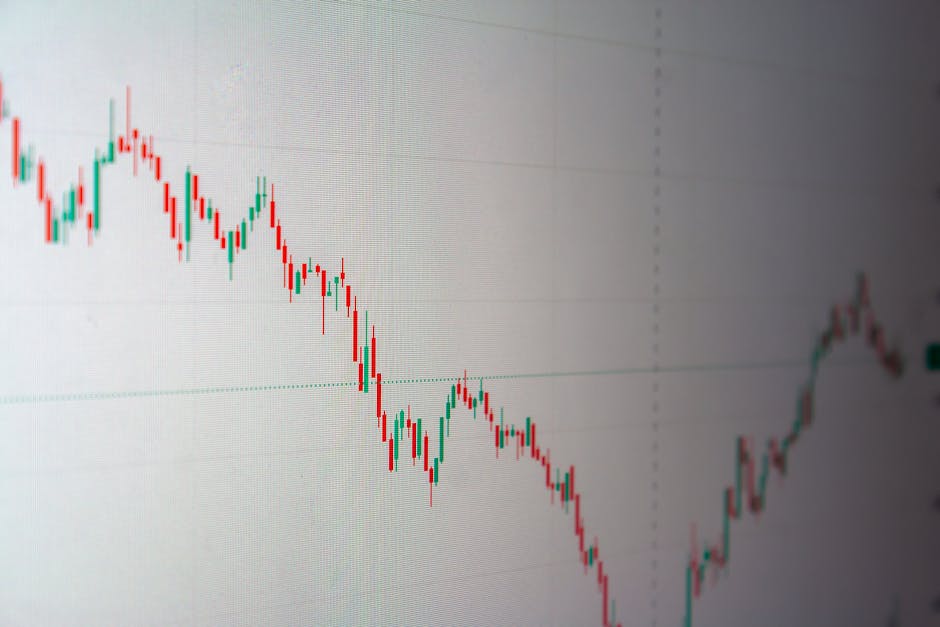
Bitcoin's performance in October marked a significant shift, experiencing its first monthly loss since 2018. This break in the seven-year streak of gains has raised questions about the cryptocurrency's traditional seasonal patterns and market dynamics. The recent decline, driven by broader market jitters and muted investor risk appetite, underscores the volatility inherent in the digital asset market. You’ll learn to understand the forces influencing Bitcoin's recent performance. This article delves into the key factors that contributed to this shift, providing insights into the market trends, external events, and investor sentiments that shaped Bitcoin's trajectory during this period.
On This Page
We Also Published
Bitcoin's October Performance: A Historic Shift
Bitcoin experienced a significant downturn in October, marking its first monthly loss since 2018. This break in its seven-year streak of gains has led to a reevaluation of the cryptocurrency's traditional seasonal patterns. This article delves into the reasons behind this shift, exploring the market forces and investor sentiments that contributed to Bitcoin's underperformance.
Market Jitters and Investor Sentiment
The decline in Bitcoin's value in October can be attributed to broader market uncertainties and a decrease in investor risk appetite. The cryptocurrency, which had previously mirrored the trends of gold and stocks, failed to attract significant investment during this period of economic uncertainty. This shift in investor behavior played a crucial role in the decline.
Analysis of Market Trends
Adam McCarthy, a senior research analyst at Kaiko, noted that Bitcoin struggled to maintain its momentum as investors hesitated to reallocate funds into the digital asset. This reluctance, coupled with external market factors, intensified the downward pressure on Bitcoin's price.
Impact of External Factors
External factors, such as the announcement of tariffs and export controls, further exacerbated the situation. These events triggered the largest crypto liquidation in history, impacting Bitcoin's price and investor confidence.
Bitcoin's Price Volatility and Liquidation Events
Bitcoin's price experienced significant volatility during October, with a notable drop during a specific period. This volatility served as a stark reminder of the cryptocurrency's inherent risks. Understanding these events is crucial for grasping the dynamics of the market.
Examining the Price Drop
Bitcoin's price fell to a low of $104,782.88 during the October 10-11 period, after reaching a record high just days earlier. This rapid decline underscored the narrowness of the asset class, with even major cryptocurrencies like Bitcoin and Ether experiencing substantial drawdowns.
Consequences of Liquidation
The largest liquidation event on record, coupled with investor uncertainty regarding global monetary policy and concerns about high valuations in equity markets, further contributed to Bitcoin's decline. This caution among participants reflects the ongoing speculation about vulnerabilities within the system.
Factors Influencing Bitcoin's Performance
Several factors influenced Bitcoin's performance in October, including market sentiment, external economic events, and the actions of key financial figures. Examining these influences provides a comprehensive understanding of the cryptocurrency's recent trajectory.
Influence of Global Monetary Policy
Uncertainty about the global monetary policy path, particularly the U.S. Federal Reserve's stance on interest rate cuts, created hesitancy among investors. This uncertainty impacted Bitcoin's price, as investors reassessed their investment strategies.
Impact of External Economic Events
External economic events, such as tariffs and export controls, played a significant role in Bitcoin's decline. These events triggered market reactions that negatively affected the cryptocurrency's performance.
Role of Key Financial Figures
Concerns expressed by influential figures, such as JPMorgan Chase CEO Jamie Dimon, regarding high valuations in equity markets, further contributed to the cautious sentiment. These warnings highlighted the potential for market corrections, influencing investor behavior.
The Future Outlook for Bitcoin
Despite the October decline, Bitcoin remains up over 16% for the year. The cryptocurrency's future depends on several factors, including regulatory developments, market sentiment, and technological advancements. Understanding these elements is essential for forecasting Bitcoin's future performance.
Regulatory Developments
Positive developments, such as the embrace of digital assets and the creation of specialized rules to accommodate digital assets, have provided a boost to cryptocurrencies. These regulatory shifts have the potential to influence Bitcoin's future performance.
Market Sentiment and Technological Advancements
Market sentiment and technological advancements will also play a crucial role in Bitcoin's future trajectory. The cryptocurrency's ability to adapt to changing market conditions and technological innovations will be essential for its long-term success.
Charting the Future Landscape
Bitcoin's performance in October serves as a reminder of the volatility and complexity of the cryptocurrency market. While the recent decline may have surprised some, it highlights the importance of understanding market dynamics, investor behavior, and external factors. As the market evolves, it is crucial to remain informed about the latest developments and trends to navigate the future landscape effectively. You’ll learn to assess the factors influencing Bitcoin's price.
From our network :
- Bitcoin price analysis: Market signals after a muted weekend
- JD Vance Charlie Kirk: Tribute and Political Strategy
- How to secure postgres connections across VPC, VPN, and cloud
- How to design postgres partitions with native and hash methods
- How to migrate to postgres using logical replication and cutover
- The Diverse Types of Convergence in Mathematics
- Bitcoin Hits $100K: Crypto News Digest
- Limit Superior and Inferior
- Limits: The Squeeze Theorem Explained
RESOURCES
- Accounting for Bitcoin and Other Cryptocurrencies under IFRS: A ...
- Performance measurement of crypto funds - ScienceDirect
- Why blockchain performance is hard to measure - a16z crypto
- On the nature and financial performance of bitcoin
- Does the realized distribution-based measure dominate particular ...
- Mathematics | Free Full-Text | Closing a Bitcoin Trade Optimally ...
- Object Driven Fuzzy Decision Model for Evaluating the ...
- Clarification on specific performance and damages assessment in ...
- The Smart Performance Analysis of Cyber Security Issues in Crypto ...
- Measuring Bitcoin's Risk And Reward
- Greening crypto portfolios: the diversification and safe haven ...
- Life Cycle Assessment of Bitcoin Mining | Environmental Science ...
- Bitcoin Valuation: Four Methods - CFA Institute Enterprising Investor
- "Portfolio performance analysis in the ASEAN-5: Assessing bitcoin ...
- Comparison of Psychological Status and Investment Style ... - Frontiers