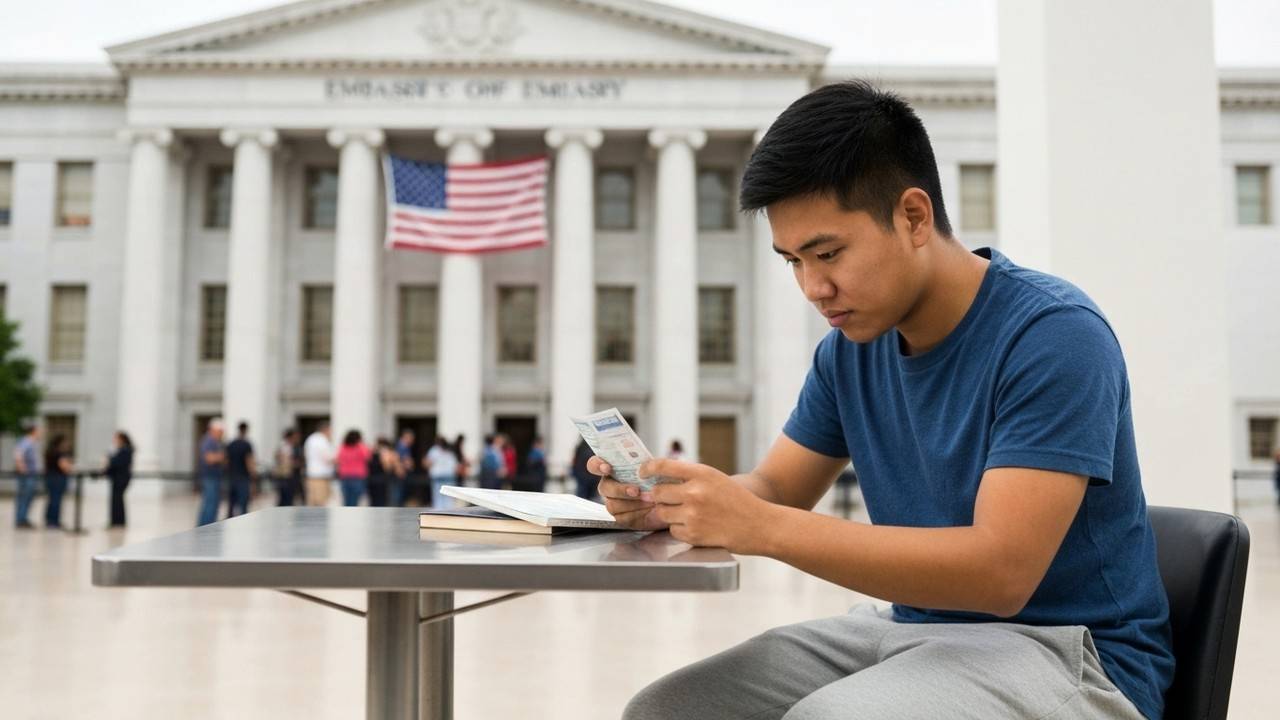
Visa interviews for F-1 student visas can be daunting. Applicants must prove they will return home after their studies, a challenge under Section 214(b) of the Immigration and Nationality Act. This law presumes non-immigrant visa applicants intend to immigrate, placing the burden on the student to prove otherwise. Preparing a strong application with clear evidence is crucial for success. You’ll learn to navigate the complexities of this process.
On This Page
We Also Published
Understanding Section 214(b) and Its Implications
Section 214(b) essentially presumes that visa applicants intend to immigrate unless they can prove otherwise. To overcome this, F-1 visa applicants must showcase that they meet their program's academic and financial criteria. They must also demonstrate a clear intention to depart the United States upon completing their authorized stay. A denial under 214(b) signifies the officer's belief that these conditions have not been met, typically due to insufficient ties to the home country or a lack of demonstrated return intent.
Key Requirements for F-1 Visa Approval
Applicants must fulfill specific academic and financial obligations to secure an F-1 visa. They need to provide evidence that they can cover tuition, living expenses, and other associated costs. This includes providing bank statements, scholarship letters, or sponsorship documentation. Meeting these financial requirements is crucial to demonstrate the ability to support oneself while studying in the US.
Strong ties to the home country are essential to demonstrate intent to return after studies. These ties can include family responsibilities, property ownership, job offers, or established career paths. Providing documentation that supports these ties is crucial. The more compelling the evidence, the higher the chances of visa approval.
Applicants must convince the consular officer of their temporary intent to reside in the US. This involves providing clear evidence that they will return home after finishing their studies. This can be achieved through a well-articulated study plan. The plan should clearly outline the chosen program, its relevance, and how it aligns with the applicant’s future goals.
Why Visa Refusals Happen Under Section 214(b)
Visa refusals under Section 214(b) often arise from the consular officer's doubts about the applicant's temporary intent. Weak economic or familial connections to the home country are a primary cause. The program's perceived value in the home country is also considered. A short interview or limited opportunity to present additional documentation can also lead to a refusal. Prior extended stays or numerous visits to the US under non-student visas may raise concerns.
Factors Contributing to Visa Denials
The lack of strong economic ties, such as job offers or property ownership, raises concerns about the applicant's intentions. Without a clear path to returning home, the officer might view the applicant's stay as indefinite. Evidence of a stable financial situation, including savings or investments, can bolster the case for temporary intent.
If the chosen program appears to have limited relevance or value in the applicant's home country, the officer may question the purpose of the study. Applicants should clearly articulate the program's relevance. They should explain how it fits into their long-term career goals and how they intend to use their acquired knowledge.
A short interview or limited chance to explain circumstances can lead to a refusal. This underscores the need for applicants to prepare. Applicants should anticipate potential questions and prepare clear and concise answers. They should also have all necessary documentation readily available to present during the interview.
Strategies for Students to Improve Their Visa Prospects
Students can take proactive steps to mitigate the risk of a 214(b) refusal. Strengthening ties to the home country is paramount, with compelling evidence demonstrating the intention to return. Clarifying the study program and post-study plans is also important. Students must prepare thoroughly for the interview. If refused, reapplying requires presenting new, stronger evidence, or seeking legal guidance. You’ll learn to demonstrate your intent to return.
Building Strong Home Country Connections
Providing evidence of a job offer, family responsibilities, or property ownership is crucial. Documentation can include employment contracts, marriage certificates, or property deeds. This evidence should leave no doubt. The goal is to establish a clear and compelling narrative that aligns with the applicant's intentions to return home after their studies.
Applicants should clearly explain why they chose their specific program. They should articulate how it aligns with their previous education or experience and future career plans. A well-defined study plan and career goals provide a clear picture of the applicant’s intent. This should show how the chosen program fits into their long-term goals.
Applicants must practice concise and confident answers to potential interview questions. All essential documentation, including the I-20 form and financial support statements, should be readily available. Maintaining composure and presenting a well-prepared case increases the chances of a positive outcome. Presenting a professional demeanor can significantly influence the officer’s perception.
Charting a Course: Overcoming Section 214(b) Challenges
The consequences of a 214(b) denial can be deeply personal, affecting an aspiring student's plans. The time invested in preparing for the visa interview, securing admission, and choosing a course can be lost. Therefore, understanding section 214(b) is essential. It's about crafting a compelling narrative of study, purpose, and return. Aligning these elements can improve the chances of approval.
| Aspect | Details |
|---|---|
| Section 214(b) | Presumes non-immigrant visa applicants have immigrant intent unless proven otherwise. |
| F-1 Visa Requirements | Meeting academic and financial requirements, and proving intent to depart the US after studies. |
| Factors Leading to Refusal | Weak ties to home country, program irrelevance, short interviews, and previous US visits. |
| Steps to Improve Prospects | Strengthen home country ties, clarify study plans, and prepare for the interview. |
RESOURCES
- Student Visa
- Students and Employment | USCIS
- Sign in to your IRCC secure account - Canada.ca
- Optional Practical Training (OPT) for F-1 Students | USCIS
- Department of Homeland Security - Form I-901
- Students and the Form I-20 | Study in the States
- Apply for a U.S. Visa
- Employment | ICE
- F-1 Curricular Practical Training (CPT) | Study in the States
- Students | ICE
- Prove your English language abilities with a secure English ...
- International Students and Social Security Numbers
- I-20/DS-2019 & Student Visa - International
- Visas - U.S. Embassy in Bangladesh - Use our new U.S. Visa Wizard!
- Student and Exchange Visitor Program | ICE
From our network :
- JD Vance Charlie Kirk: Tribute and Political Strategy
- How to design postgres partitions with native and hash methods
- How to secure postgres connections across VPC, VPN, and cloud
- The Diverse Types of Convergence in Mathematics
- Limits: The Squeeze Theorem Explained
- Bitcoin price analysis: Market signals after a muted weekend
- Bitcoin Hits $100K: Crypto News Digest
- Limit Superior and Inferior
- How to migrate to postgres using logical replication and cutover